
@Ayesha_Ahmad
🤖 The Future of AI: How the European Union is Setting Global Rules
Artificial Intelligence (AI) is rapidly transforming the way we live, work, and interact. From virtual assistants to advanced healthcare systems, AI is becoming an integral part of modern society. However, with great power comes great responsibility—and the world is now taking steps to regulate this powerful technology. Leading this effort is the European Union with its groundbreaking new law on AI.
🌍 What is the EU AI Act?
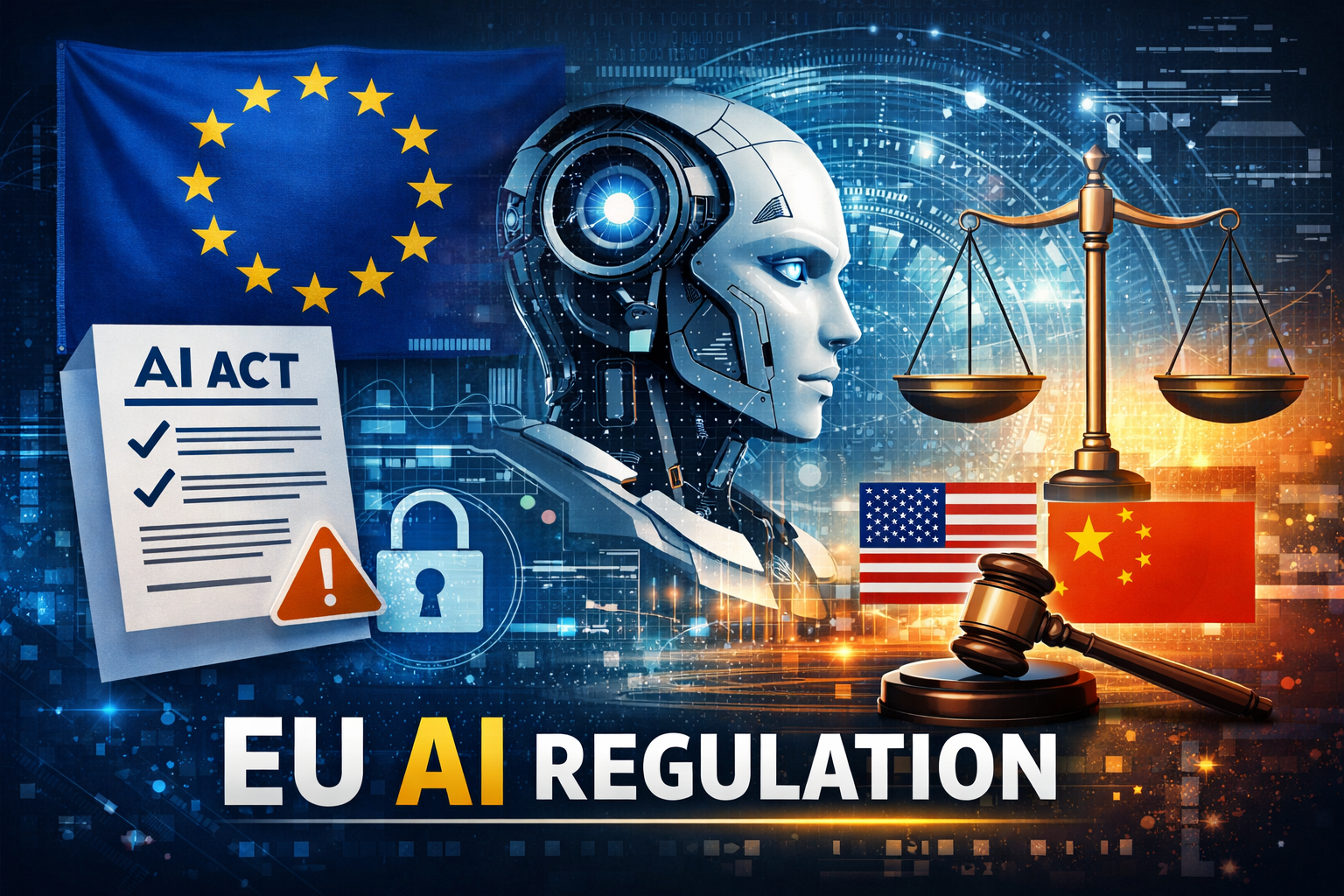
The European Union has introduced a landmark regulation known as the AI Act, aimed at controlling how AI systems are developed and used. It is one of the first comprehensive legal frameworks in the world focused entirely on artificial intelligence.
The goal of this law is simple: to ensure that AI is used safely, ethically, and transparently, without harming individuals or society.
📊 Risk-Based Approach
One of the most important features of the AI Act is its classification of AI systems based on risk levels:
– Low Risk: AI systems like chatbots or recommendation algorithms that pose minimal threat.
– Medium Risk: Systems that require some transparency but are not highly dangerous.
– High Risk: AI used in sensitive areas such as healthcare, education, hiring, and law enforcement. These systems will face strict regulations.
– Unacceptable Risk: AI applications that threaten human rights—such as mass surveillance or social scoring—may be completely banned.
This structured approach allows authorities to monitor AI without stopping innovation.
⚖️ Strict Rules and Penalties
The AI Act introduces strict obligations for companies and developers:
– High-risk AI systems must undergo thorough testing and evaluation.
– Companies must ensure data privacy and transparency.
– Violations of the law can result in heavy fines, similar to the EU’s data protection rules.
This ensures accountability and encourages companies to develop responsible AI technologies.
🌐 Global Impact
The EU’s decision is not just limited to Europe—it is likely to influence the entire world.
Countries like the United States and China may adopt similar regulations, and global tech giants such as Google and Microsoft will need to adapt their systems to comply with these rules.
This could set a global benchmark for AI governance.
🧠 Why This Matters
AI has the potential to shape the future in unimaginable ways. Without proper regulation, it could lead to:
– Privacy violations
– Job displacement
– Bias and discrimination in decision-making
By introducing the AI Act, the European Union is taking a proactive step to ensure that AI remains a tool for progress rather than a source of harm.
✨ Conclusion
As AI continues to evolve, the need for clear and effective regulation becomes increasingly important. The EU AI Act represents a significant milestone in the global effort to manage artificial intelligence responsibly.
The world is now watching closely—and this could be the beginning of a safer, more ethical AI-driven future.
—
Stay informed as technology and policy continue to shape the world around us.